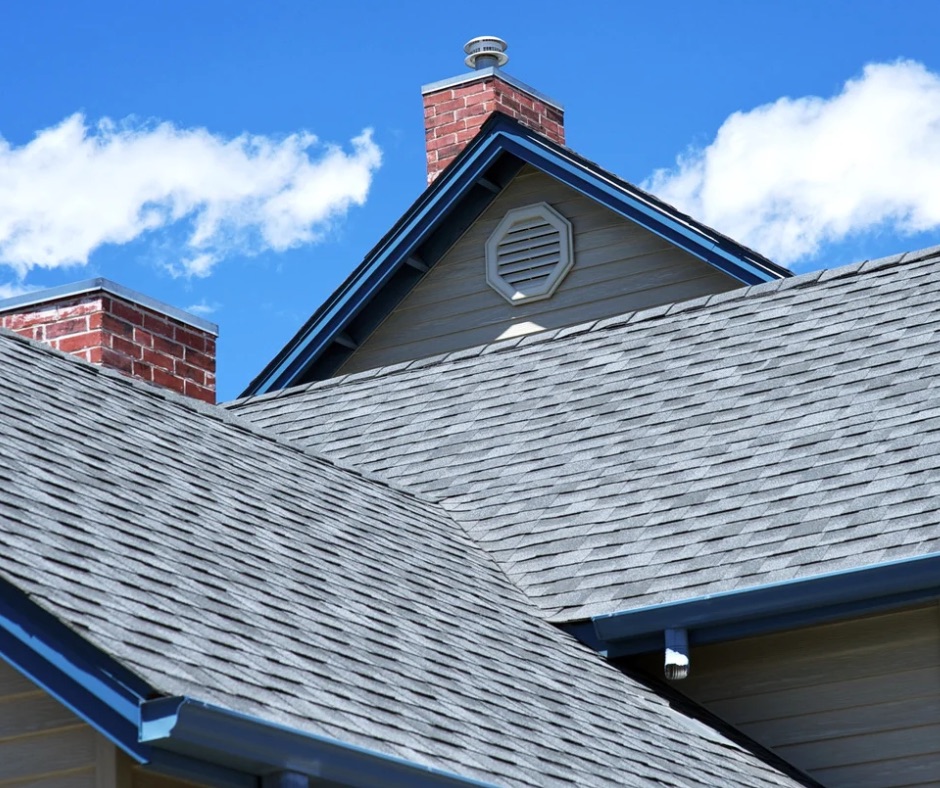
3-Tab vs. Architectural vs. Luxury Shingles: A Columbus Buyer's Guide
Asphalt shingles cover roughly 75 percent of American homes — including the vast majority of Columbus residential roofs. But "asphalt shingle" isn't one product. It's a category with three distinct tiers, each with different lifespans, costs, wind ratings, appearances, and Ohio climate performance.
The decision between 3-tab, architectural, and luxury shingles is one of the more consequential roofing choices a Columbus homeowner makes. The product that goes on the roof shapes how long the roof lasts, how well it handles Ohio storms, and how much the next 25 years of roof ownership will cost.
Here's what actually separates the three tiers, what each costs installed in Columbus, and which one fits which home.
3-Tab Shingles
3-tab shingles are the original asphalt shingle — flat, single-layer, with three vertical "tabs" cut into each piece to create the staggered pattern visible from the street.
Construction: A single layer of asphalt-saturated fiberglass mat coated with mineral granules. Each shingle is one consistent thickness throughout, typically around 8–10 mm.
Appearance: Uniform, flat profile. The lines between tabs are very visible, producing a slightly stripey appearance on the roof. Limited color and texture variation between manufacturers.
Wind rating: Typically 60 mph (Class A or D rated). Some products achieve 70 mph with specific installation methods. By comparison, Ohio sees gusts above 60 mph during most spring and summer storms — and well above that during severe weather events.
Lifespan: 15–20 years in Ohio conditions. Manufacturer warranties typically run 20–25 years but real-world performance — including granule loss, edge curling, and tab lifting — usually compromises the roof's appearance and function before warranty expiration [1].
Installed cost in Columbus: Approximately $4–$6 per square foot. For a typical 2,000 sq ft Columbus home with a moderate roof complexity, that's roughly $8,000–$12,000 [2].
Best for: Rental properties. Flips. Budget renovations on homes where 15-year roof lifespan is acceptable. Homeowners planning to sell within 5–10 years where the roof needs to be functional but not premium.
Not appropriate for: Long-term ownership. Homes in higher-end neighborhoods where 3-tab visually downgrades the property. Storm-prone areas where 60 mph wind rating is marginal.
Architectural Shingles (Dimensional or Laminate)
Architectural shingles — also called dimensional or laminate shingles — are the current dominant residential product. The 2024 Asphalt Roofing Manufacturers Association data shows architectural shingles now represent over 95 percent of new asphalt shingle installations on residential homes [3].
Construction: Two or more layers of asphalt material laminated together, creating a thicker, more dimensional shingle. The varied layers produce shadow lines and texture visible from the street.
Appearance: Substantially more dimensional than 3-tab. Manufacturers produce architectural shingles in many color blends and texture patterns, often designed to mimic the look of cedar shake, slate, or wood shingles. Each shingle has visible depth.
Wind rating: Typically 110–130 mph (Class F to Class H rated). Standard installation methods on quality products meet or exceed Ohio's most severe wind events. This is a meaningful upgrade from 3-tab and a real factor in storm-prone areas.
Lifespan: 25–30 years in Ohio conditions. Quality products have realistic 30+ year lifespans when properly installed with adequate ventilation. Manufacturer warranties run 30 years to lifetime, depending on the product line [1].
Installed cost in Columbus: Approximately $5.50–$9 per square foot. For a typical 2,000 sq ft Columbus home, that's roughly $11,000–$18,000 [2].
Best for: Most Columbus homes. The standard specification for any homeowner planning to stay 7+ years, for any home in an established neighborhood, and for any project where the roof needs to handle Ohio weather without ongoing concerns.
Not appropriate for: Lowest-budget projects where every dollar counts. Specific aesthetic contexts where a premium look (synthetic slate, real cedar shake, designer shingles) is the design intent.
Why Architectural Has Become the Default
A few specific reasons architectural shingles have displaced 3-tab as the standard:
Wind rating matters in Ohio. A 110-mph wind-rated shingle handles real Ohio storms; a 60-mph 3-tab is marginal. Insurance claims related to wind damage often look different on architectural vs. 3-tab roofs — the architectural shingle stays put when the 3-tab next door peels off.
Appearance carries the property. A 3-tab roof reads as "builder grade" on a $400,000 Columbus home. Architectural reads as appropriate. The marginal cost difference is small; the perceived quality difference is large.
Lifespan economics favor architectural. A 3-tab roof at $10,000 lasting 17 years averages $588/year of roof. An architectural roof at $15,000 lasting 28 years averages $536/year. The architectural roof costs more up front and less over its lifetime.
Insurance treats them differently. Some insurance carriers offer preferred rates for impact-resistant Class 4 shingles — almost always architectural products, never 3-tab. The premium difference can be meaningful in storm-prone Ohio counties.
Luxury / Designer Shingles
Luxury shingles — also called designer, premium, or specialty asphalt — are the top tier of asphalt roofing. They're designed to mimic the appearance of more expensive materials like slate, cedar shake, or tile, at a fraction of those materials' costs.
Construction: Multiple thick laminated layers, sometimes with three or four distinct layers visible. Often featuring oversized tabs, irregular edges, or sculpted textures.
Appearance: Premium and distinctive. Common product families include slate-look (GAF Camelot, CertainTeed Grand Manor, Owens Corning Berkshire), shake-look (CertainTeed Presidential, GAF Grand Sequoia), and luxury dimensional (Owens Corning TruDefinition Duration Designer).
Wind rating: Typically 110–130 mph, similar to architectural. Some products achieve 150 mph with specific installation methods.
Lifespan: 30–50 years. Premium products often carry limited lifetime warranties with substantial actual lifespan [1].
Installed cost in Columbus: Approximately $9–$16 per square foot. For a typical 2,000 sq ft Columbus home, that's roughly $18,000–$32,000.
Best for: Higher-end Columbus homes (typically $500K+) where roof appearance contributes meaningfully to property value. Historic homes where slate or cedar look is appropriate but real slate or cedar isn't budget-feasible. Long-term ownership where the 30–50 year lifespan justifies the premium.
Not appropriate for: Standard Columbus homes where the roof's premium appearance won't translate to resale value. Short-term ownership where the cost premium won't be recovered. Budget-constrained projects where the marginal upgrade over architectural doesn't justify the cost.
How the Three Compare in Real Numbers
For a typical 2,000 sq ft Columbus home requiring full roof replacement:
| Tier | Installed Cost | Expected Lifespan | Cost Per Year of Service |
|---|---|---|---|
| 3-tab | $8,000–$12,000 | 15–20 years | $400–$800/year |
| Architectural | $11,000–$18,000 | 25–30 years | $367–$720/year |
| Luxury | $18,000–$32,000 | 30–50 years | $360–$1,067/year |
The cost-per-year-of-service math shows what's actually being purchased. 3-tab looks cheap up front but isn't necessarily cheap over the roof's lifetime. Architectural is the best value at every measurement. Luxury costs more per year for the top of its range but produces a roof that's effectively "done" for the home's foreseeable future.
The Ohio Climate Factor
Ohio's climate is hard on asphalt shingles. The freeze-thaw cycle alternates between warm-and-wet and cold-and-frozen conditions repeatedly through fall, winter, and spring. The repeated expansion and contraction stresses every shingle joint and seam.
Ohio also sees:
- Severe wind events from spring storms and remnant systems from southern hurricanes
- Periodic hail, particularly in central and southern Ohio
- Ice dam conditions on roofs with inadequate insulation and ventilation
- UV exposure that's lower than Sun Belt states but high enough to matter over 20-year periods
Each of these favors thicker, more durable shingles. A 3-tab roof in Ohio doesn't necessarily reach its rated 20-year lifespan because the freeze-thaw and wind events accelerate aging. An architectural roof handles these conditions much better — the multiple layers, better adhesion, and higher wind ratings translate directly to longer real-world service.
This is why Columbus-area roofing contractors typically default to architectural shingles for any roof intended to be a serious 25+ year installation. The marginal cost is reasonable; the marginal performance is meaningful.
Brand Differentiation Within Each Tier
The three major asphalt shingle manufacturers — GAF, CertainTeed, and Owens Corning — each produce products at all three tiers. Brand reputation, warranty terms, and specific product details differ, but within each tier the major brands are roughly equivalent in real-world performance.
What matters more than brand is:
Installation quality. A premium shingle installed poorly fails earlier than a basic shingle installed correctly. Nail patterns, starter strips, drip edge, ridge cap, and proper underlayment all matter more than which shingle brand sits on top.
Ventilation. Inadequate attic ventilation cooks shingles from below, dramatically shortening lifespan. Premium shingles on a poorly ventilated roof can fail within 15 years.
Underlayment specification. Ice and water shield at eaves, valleys, and penetrations is non-negotiable in Ohio. Standard 30-pound felt or synthetic underlayment covers the field.
A contractor who can speak to these details is one whose installation will last. A contractor focused only on the shingle brand is missing the actual quality drivers.
How to Decide
A practical framework:
Choose 3-tab if: The home is a rental, flip, or short-term-ownership property where 15-year roof life is acceptable and minimizing up-front cost is the binding constraint.
Choose architectural if: This is most Columbus homes. Long-term ownership, established neighborhood, standard residential property. The cost premium over 3-tab is small and the value over 25–30 years is large.
Choose luxury if: The home is higher-end (typically $500K+ in Columbus), the roof appearance contributes meaningfully to property value, and long-term ownership justifies the premium.
The most common Columbus mistake is choosing 3-tab when architectural makes more sense — saving $3,000–$5,000 up front while accepting a 10-year-shorter roof life and lower curb appeal. The second-most-common mistake is choosing luxury when architectural would serve equally well — paying $10,000+ premium for an appearance the neighborhood won't pay back at resale.
The Bottom Line
For most Columbus homeowners, architectural shingles are the right answer. The cost premium over 3-tab is modest. The lifespan, wind rating, and appearance upgrades are substantial. The brand differentiation matters less than the installation quality.
3-tab still has a place — rental properties, flips, certain low-budget situations — but it's not the default for typical residential roofing. Luxury shingles are the right call for higher-end homes where roof appearance contributes to property value. For everything in between, architectural is the standard.
The right shingle on the wrong house wastes money. The wrong shingle on the right house compromises the roof's value over its full service life. Knowing which tier fits the project is worth the time it takes to understand the difference.
For the full discussion of roof replacement costs in Columbus, including installation factors, additional cost drivers, and contractor selection, see the shingle roof replacement guide.
Sources
Related Posts
GAF vs CertainTeed vs Owens Corning: Do Shingle Brands Actually Differ?
GAF vs CertainTeed vs Owens Corning: Learn how roofing shingles really differ in durability, warranties, wind resistance, algae protection, impact ratings, and installation.
Tear-Off vs. Overlay Roofing: Why Adding a Second Layer of Shingles Is Usually a Costly Mistake
Thinking about installing new shingles over old ones? Learn why a complete roof tear-off often provides better protection, longer lifespan, and fewer costly surprises for Columbus homeowners.
What Goes Under Your Shingles? Underlayment, Ice & Water Shield Explained
What Goes Under Your Shingles? Underlayment, Ice & Water Shield Explained | iSpec LLC What Goes Under Your Shingles? Understanding Underlayment, Ice &