Shingle vs. Metal Roof: Which Is Right for Your Columbus Home?
Metal roofing has been gaining share in Central Ohio for a decade, and for some homes it's a fantastic choice. For others it's expensive overkill. Here's the straight comparison — what each material is actually good at, what it costs in Columbus right now, and which home styles each one fits.
The Five-Second Summary
Asphalt shingle is the right choice for most Columbus homes. It's cheaper up front, lasts 22 to 28 years with a modern architectural product, and it looks appropriate on the suburban and traditional housing stock that dominates Central Ohio. Metal is the right choice when you're planning to stay in the home 20+ years, you have a low-slope roof where shingles struggle, or you own a modern or rural-style home where metal complements the architecture.
Both are good products. The question isn't which is "better" — it's which fits your situation.
Cost: What They Actually Run in Columbus (2026)
| Factor | Architectural Shingle | Standing-Seam Metal |
|---|---|---|
| Installed cost per square | $475 – $650 | $1,100 – $1,600 |
| Typical 25-square home | $11,900 – $16,300 | $27,500 – $40,000 |
| Cost premium | — | ~2.3× shingle |
| Expected lifespan | 22–28 years | 50+ years |
| Cost per year of service | $425 – $740 | $550 – $800 |
On a cost-per-year basis the two are closer than they look. But that only matters if you stay in the home long enough for metal's lifespan to pay back its premium. If you're likely to sell within 10 years, the premium you pay for metal probably won't come back at resale — the next buyer rarely gives you full credit for longer remaining life.
Lifespan and Durability
Modern architectural asphalt shingles are rated 25 to 50 years by the manufacturer, but the real-world life in Central Ohio is 22 to 28 years for a mid-grade product. The variables that shorten that window are attic ventilation, sun exposure (south-facing slopes age faster), and installation quality. Hail events can end a shingle roof early.
Standing-seam metal properly installed lasts 50 years easily and often 70+. The coating (PVDF/Kynar 500 finishes) typically carries a 35-year warranty against fade and chalking. The metal itself doesn't fail — penetrations and sealants need occasional attention, but the panels are generally the last thing to wear out.
Hail and impact
Hail is where this comparison gets interesting in Ohio. Shingles can be rendered functionally defective by a moderate hail event (1.25-inch+ stones). Metal will dent in heavy hail but almost never leaks from it. For insurance-prone homeowners or high-deductible policies, that's a real durability advantage for metal. Cosmetically, deep dents can make a metal roof look bad — but the roof itself keeps working.
Wind
Both systems can be rated to the same wind speeds. Architectural shingles properly nailed (six nails per shingle, not the factory-spec four) meet 130 mph. Standing-seam metal, mechanically seamed, meets 170+ mph. In practice, wind damage to Columbus roofs is almost always an installation issue, not a material issue.
Noise: The Rain-on-Metal Question
This is the question every homeowner asks. The short answer: a properly installed standing-seam roof on a residential home is not significantly louder than a shingle roof. The reason is that residential metal installs go over a solid roof deck (plywood or OSB) with synthetic underlayment and often an acoustic layer. The loud-metal-roof association comes from agricultural buildings and pole barns, where the metal is attached directly to purlins with no deck underneath.
You can still hear rain slightly more on metal than on shingles, especially during a hard driving rain. Some homeowners love it. If you're rain-sensitive, it's worth asking your contractor if they can show you a metal install you can visit during or after a rain.
Aesthetics and Home Style
This is underrated. A material can perform beautifully and still be the wrong choice if it looks out of place on your home.
Where shingle looks right
Shingle is the native material for nearly every Columbus housing style built between 1920 and today: Clintonville foursquares, Upper Arlington Tudors and colonials, Grandview bungalows, the ranches of Worthington and Bexley, and essentially every subdivision home from Dublin to New Albany. Architectural dimensional shingles in a weathered wood or charcoal blend disappear visually and look appropriate.
Where metal looks right
Metal shines on modern and contemporary architecture (think the new-build custom homes going up near Rocky Fork and on the outskirts of Dublin), farmhouses and farmhouse-modern builds, homes with strong horizontal lines, and cabins or rural properties. Standing seam with hidden fasteners in a charcoal or patina bronze finish looks absolutely at home on these styles. A gambrel barn-style garage or pool house often benefits from metal even when the main house has shingles.
Where metal looks wrong
On a traditional two-story Colonial with dormers and a steep gable, standing-seam metal often looks jarring — the roof becomes the loudest element of the home and fights the traditional proportions. Metal shingles (which mimic the dimension of asphalt but in steel) are an alternative on these homes, but they cost nearly as much as standing seam with less of the benefit.
The drive-by test: Drive through your neighborhood at 15 mph and count metal roofs. If there are almost none, installing metal will make your home stand out — which cuts both ways at resale. Some buyers will appreciate it. Others will see a roof that doesn't match the block and mentally deduct from their offer.
Resale Value
A new shingle roof returns roughly 60–70% of its cost at resale, according to Remodeling's Cost vs. Value report. Metal roofs don't have the same data depth, but the industry consensus is roughly the same percentage — sometimes a little higher on appropriate home styles, lower on mismatched ones.
Both materials earn back most of their value through faster sale and broader buyer pool, not through a dollar-for-dollar appraisal bump. Appraisers generally credit a newer roof with $5,000 to $15,000 regardless of material. Your listing agent will tell buyers "new roof" either way.
Energy and Heat
Cool-roof colors (light-reflective finishes) can reduce summer attic temperatures meaningfully — 10 to 20°F is typical. Both asphalt and metal have cool-roof options. Asphalt's "cool" options are limited to lighter colors. Metal can be had in nearly any color with reflective PVDF pigments.
In the Columbus climate, the summer-cooling savings from a cool roof are real but modest — $50 to $150 per year on a typical home. The winter heating penalty is basically zero because the heat you want in winter is already lost to the sky through the roof assembly regardless of surface color. Don't buy either material primarily for energy savings; buy it for the other reasons and take the cooling benefit as a bonus.
Installation Considerations
Shingle
Almost every residential roofer in Central Ohio installs shingles — it's the default skill. Your vetting is more about the contractor's process (tear-off, ice and water coverage, flashings, warranty) than whether they can do the work at all. A 2,500-square-foot home is typically completed in 2–3 days.
Metal
Standing-seam metal requires specialized training, specialized tooling, and typically specialized labor. Not every shingle contractor can do it well. Common installation mistakes — panel fastening in the wrong location, under-sized clip spacing, sealant-only transitions — will cause leaks that are expensive to diagnose and fix. If you're going metal, you need a contractor with a portfolio of recent metal installs, not just one who "can do it."
Installation takes longer (typically 4–7 days for the same home) because each panel is cut and seamed in place.
Which Columbus Homes Should Choose Each
Choose shingle if...
You live in a traditional Central Ohio neighborhood (Upper Arlington, Bexley, Worthington, Dublin, Clintonville, New Albany), you plan to be in the home less than 20 years, you want a cost-efficient replacement, or your roof has significant complexity (multiple valleys, dormers, skylights) where metal's premium compounds.
Choose metal if...
You own a modern or farmhouse-style home, you plan to be in the home 20+ years, you have a section of low-slope roof where shingles struggle (below 4/12 pitch), you've had repeated hail damage and want to stop claiming, or you just want the aesthetic and can pay for it. These are all legitimate reasons.
Consider a hybrid
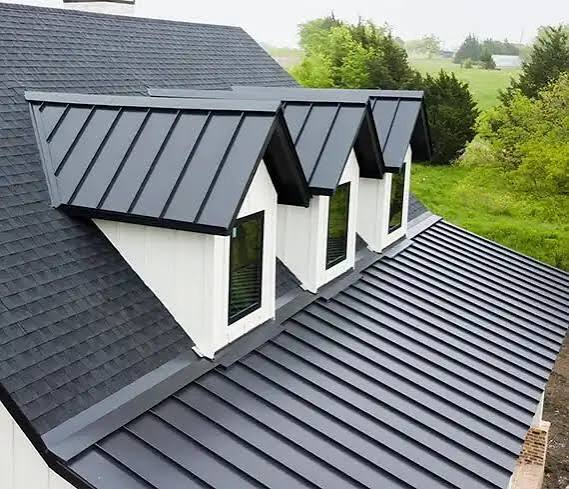
Many Columbus homes benefit from a hybrid install: standing-seam metal on the lower-slope sections (porches, additions, dormers) where shingle always struggles, and architectural shingle on the main steep slopes. This solves the functional problem (low-slope failure) without paying the metal premium for the whole roof. A good contractor will suggest this when the roof calls for it.
Our honest take: We install both and we'll tell you which one fits. If you come to us with a traditional Columbus home and a 10-year horizon, we'll quote shingle and explain why. If you have a modern home in a newer subdivision or a farmhouse on rural land, we'll quote metal. If the answer is a hybrid, we'll tell you that. The right answer depends on your specific home and situation — not on what we'd prefer to sell.